Shastha Lift Carrier Private Limited
EST. 2009. 15 YEARS OF TRUST
EST. 2009. 15 YEARS OF TRUST

EST. 2009. 15 YEARS OF TRUST
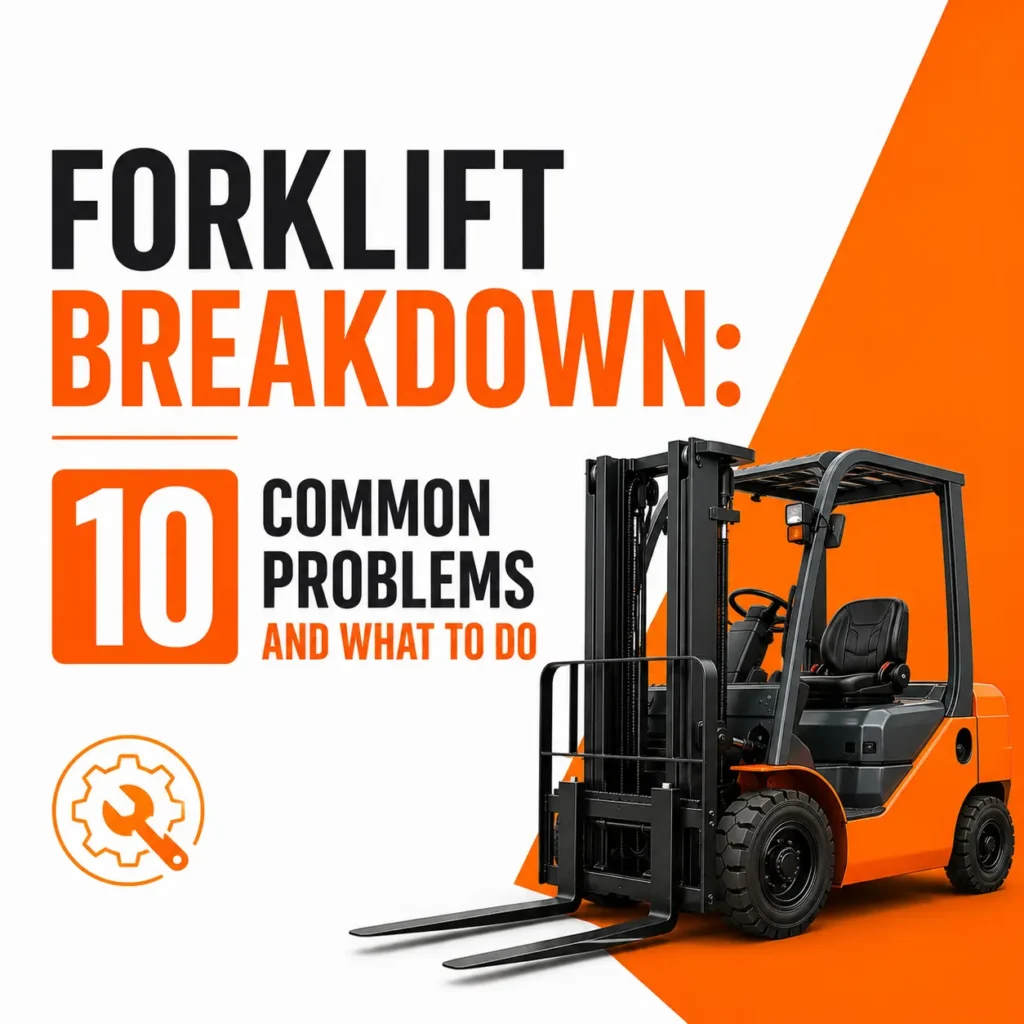
Forklift Breakdown: 10 Common Problems and What to Do
Forklift Breakdown Services
A forklift breakdown never happens at a convenient time. It happens mid-shift, mid-load, mid-deadline — and every minute your machine is down, your warehouse, factory floor, or logistics yard loses productivity. Whether you run a single Toyota reach truck or a mixed fleet of Godrej, Jungheinrich, Heli, Hangcha, Voltas, ACE, or Komatsu forklifts, knowing the early warning signs of a breakdown — and having a reliable forklift breakdown service on call — can save you thousands in downtime.
At Shastha Lift Carrier Private Limited, we’ve been troubleshooting and repairing forklifts across Chennai, Coimbatore, Hosur, Bangalore, and Hyderabad for over 15 years. Below, we break down the 10 most common forklift breakdown problems, what causes them, and what to do the moment they happen.
Quick Answer: What Causes Most Forklift Breakdowns?
Most forklift breakdowns stem from hydraulic leaks, battery/electrical faults, worn tyres, overheating engines, or delayed maintenance. Regular AMC checks catch over 80% of these issues before they cause a full breakdown.
10 Common Forklift Breakdown Problems
Symptoms: Slow or jerky lifting, forks not rising to full height, visible fluid leaks under the mast.
Cause: Worn hydraulic seals, low fluid levels, or a failing hydraulic pump — one of the most frequent triggers of a forklift breakdown in high-cycle warehouse operations.
What to do: Stop operating immediately. Running a forklift with low hydraulic pressure can damage the pump entirely. Check fluid levels first, but if the leak persists, this needs a trained technician, not a top-up.
2. Battery and Electrical Faults
Symptoms: Forklift won’t start, dashboard lights flickering, sudden power loss mid-shift.
Cause: Corroded terminals, undercharged batteries, faulty wiring, or a failing alternator (for IC forklifts).
What to do: Check terminal connections for corrosion and ensure the battery is fully charged. If the forklift still won’t hold power, it’s an electrical fault that needs diagnostic testing — a common callout for our emergency forklift repair team.
3. Tyre Wear and Damage
Symptoms: Uneven ride, vibration, reduced stability while lifting, visible cracking or flat-spotting on solid tyres.
Cause: Overloading, rough flooring, or tyres simply reaching end-of-life. Solid tyres on high-usage forklifts typically need replacement every 1,500–2,000 operating hours.
What to do: Don’t wait for a blowout. Shastha operates a 120-Ton hydraulic press for solid tyre pressing, letting us replace tyres on-site or at our facility without needing a new wheel assembly — a faster, more cost-effective fix than most competitors offer.
4. Engine Overheating
Symptoms: Temperature gauge in the red, steam or burning smell, sudden power drop under load.
Cause: Low coolant, blocked radiator, worn fan belt, or continuous heavy-duty use in high-temperature environments — common across SIPCOT, Oragadam, and Sriperumbudur industrial zones in peak summer.
What to do: Shut the forklift down immediately to prevent engine seizure. Let it cool before checking coolant levels. Persistent overheating needs a technician to inspect the cooling system.
5. Brake Failure or Reduced Braking Response
Symptoms: Soft brake pedal, delayed stopping, grinding noise when braking.
Cause: Worn brake pads, low brake fluid, or air in the brake lines.
What to do: This is a safety-critical fault — take the forklift out of service immediately. Brake issues are non-negotiable and should always be handled through a professional forklift repair service, never a workaround.
6. Steering Problems
Symptoms: Stiff or unresponsive steering, unusual noise when turning, forklift pulling to one side.
Cause: Low power steering fluid, worn steering column components, or misaligned wheels.
What to do: Steering faults compromise operator control in tight warehouse aisles. Report it immediately rather than compensating manually — this is a frequent cause of near-miss incidents on the floor.
7. Mast and Chain Issues
Symptoms: Jerky or uneven lifting, forks tilting unevenly, visible chain slack or rust.
Cause: Chain stretch, lack of lubrication, or misalignment from repeated heavy lifting cycles.
What to do: Inspect chains for lubrication and wear during routine checks. A stretched or rusted chain under load is a serious safety hazard and should be replaced, not adjusted.
8. Fuel or LPG System Malfunctions
Symptoms: Engine sputtering, poor acceleration, difficulty starting IC or LPG-powered forklifts.
Cause: Contaminated fuel, clogged fuel filter, or LPG regulator issues.
What to do: Avoid running the engine on suspected contaminated fuel, as it can damage the fuel system further. This requires a technician trained on your specific forklift brand and fuel type.
9. Transmission Trouble
Symptoms: Delayed response when shifting direction, unusual noise in gear changes, loss of drive power.
Cause: Low transmission fluid, worn clutch components (manual transmission forklifts), or internal wear from years of stop-start warehouse use.
What to do: Transmission repairs are complex and brand-specific. This is where 15+ years of multi-brand experience across Toyota, Godrej, Jungheinrich, Heli, Hangcha, Voltas, ACE, and Komatsu forklifts makes a measurable difference in diagnosis speed.
10. Warning Light or Sensor Malfunctions
Symptoms: Dashboard warning lights staying on, inconsistent sensor readings, error codes.
Cause: Faulty sensors, wiring issues, or a genuine underlying mechanical fault the sensor is correctly flagging.
What to do: Never ignore a persistent warning light. It’s often the earliest indicator of one of the nine issues above, and catching it early is far cheaper than an emergency forklift repair later.
Facing a Forklift Breakdown Right Now?
Don’t let downtime cost you production hours. Shastha Lift Carrier Private Limited offers rapid-response forklift breakdown service across Chennai, Coimbatore, Hosur, Bangalore, and Hyderabad — backed by 15+ years of experience, a 4.9-star rating from 79 Google reviews, and zero outsourcing on any repair.
Call our team now for emergency forklift repair, or schedule an AMC visit to prevent your next breakdown before it happens.
How to Prevent Forklift Breakdowns
Most of the issues above are preventable with a structured Annual Maintenance Contract (AMC). Regular inspections catch hydraulic leaks, tyre wear, and electrical faults before they escalate into full breakdowns and unplanned downtime.
At Shastha, our AMC clients experience significantly fewer emergency callouts because our technicians — with zero outsourcing and full in-house expertise — catch these problems during scheduled visits, not during a shutdown.
When to Call an Emergency Forklift Repair Team
Call immediately if you notice:
- Hydraulic fluid pooling under the forklift
- Any brake or steering irregularity
- Burning smells or visible smoke
- Sudden loss of lifting power mid-operation
- Warning lights that don't clear after restart
Attempting to keep a forklift running through any of these signs risks operator safety and turns a same-day repair into a multi-day part replacement.
Have Questions ?
Related Questions
Hydraulic system failure and battery/electrical faults are the two most common causes, often triggered by delayed maintenance or high-cycle usage without regular servicing.
Response time depends on location, but Shastha maintains a service network covering Chennai, Coimbatore, Hosur, Bangalore, and Hyderabad — including industrial zones like Peenya, Bommasandra, Pashamylaram, and Patancheru — for faster on-site response.
Yes. Worn or cracked solid tyres cause instability, uneven load distribution, and stress on the mast and hydraulic system, which can lead to secondary breakdowns if left unaddressed.
In most cases, repair is far more cost-effective than replacement, especially with access to 15,000+ spare parts SKUs and multi-brand technical expertise. Replacement is typically only advised for forklifts beyond their operational lifespan.
Yes. Shastha services Toyota, Godrej, Jungheinrich, Heli, Hangcha, Voltas, ACE, and Komatsu forklifts, with zero outsourcing on repairs.