Shastha Lift Carrier Private Limited
EST. 2009. 15 YEARS OF TRUST
EST. 2009. 15 YEARS OF TRUST

EST. 2009. 15 YEARS OF TRUST
Forklift Tyre Wear: 6 Signs You Need a Retread Now
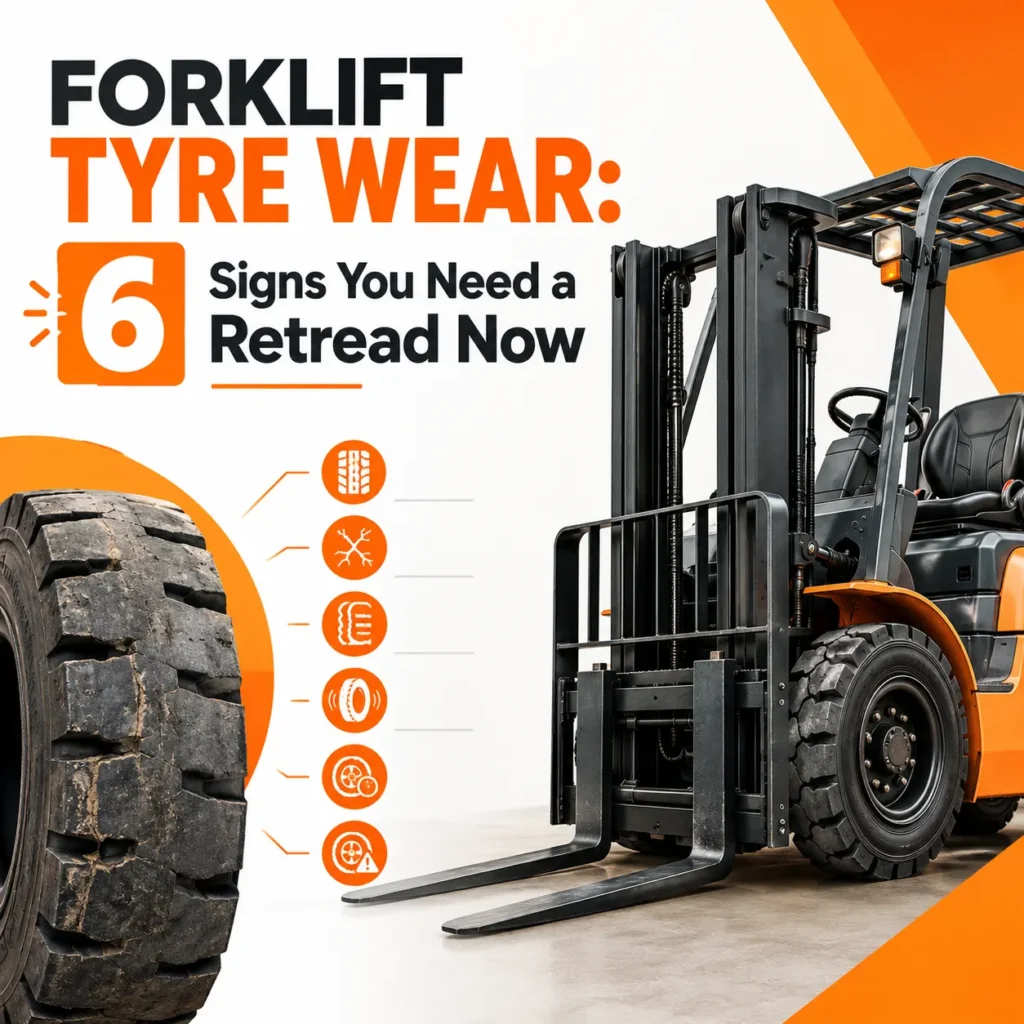
6 Signs Your Forklift Needs a Solid Tyre Change Before It Breaks Down
Forklift tyres don’t get the attention they deserve — until they fail at the worst possible moment. Unlike a car, where a worn tyre is mostly a safety concern, a forklift running on degraded solid tyres loses lift stability, wastes fuel or battery power fighting extra resistance, and puts unnecessary strain on the mast, axles, and hydraulic system. Left unchecked, a bad tyre doesn’t just cost you a tyre change — it accelerates wear across the whole machine.
At Shastha Lift Carrier, our 120-ton hydraulic press at the Manali facility handles solid tyre pressing for forklifts across Chennai, Coimbatore, Hosur, Bangalore, and Hyderabad — Toyota, Godrej, and every other major brand. Here are the six signs that tell you it’s time, before a worn tyre turns into a bigger repair bill.
1. Visible Chunking or Cracking
Solid tyres are built to resist wear, but years of use on rough warehouse or yard surfaces eventually cause the rubber to crack, chip, or chunk away in visible sections. Once chunks start separating from the tyre body, the wheel is running on an uneven surface — which throws off load stability and accelerates wear on the wheel bearings and axle.
What to do: A quick visual inspection during routine maintenance catches this early. If you can see exposed metal or significant chunking, schedule a tyre press before the next shift, not after.
2. Flat-Spotting or Uneven Wear Patterns
If a forklift sits parked in the same spot for long periods — common in facilities running single shifts — the tyre can develop a flat spot where it’s been resting. You’ll feel this as a rhythmic thump or vibration when driving, especially at low speed. Uneven wear across the tyre width, meanwhile, often points to alignment issues or an overloaded axle.
What to do: Flat-spotting alone doesn’t always require immediate replacement, but combined with vibration during operation, it’s worth having inspected — continuing to run on a flat-spotted tyre accelerates damage to the wheel assembly.
3. Reduced Tread Depth Near the Wear Line
Most solid forklift tyres have a wear indicator line molded into the rubber — a visible marker showing the minimum safe tread depth. Once the tyre wears down to or past this line, load stability and traction both drop, particularly on smooth concrete or slightly wet surfaces.
What to do: Check tread depth against the wear line during scheduled inspections. This is one of the most objective, easy-to-check signs — no guesswork needed, unlike some of the softer signs on this list.
4. Increased Vibration or Rough Ride
A forklift that used to run smoothly but now vibrates noticeably — especially at operating speed — is often telling you the tyres have hardened, developed flat spots, or worn unevenly. This isn’t just an operator comfort issue; sustained vibration accelerates wear on the mast, hydraulic fittings, and even the operator’s long-term physical strain from repeated exposure.
What to do: Don’t dismiss a “slightly rougher ride” as normal aging. Compare it against a similar forklift in your fleet, or ask your technician to check tyre condition on the next service visit.
5. Difficulty Steering or Increased Turning Effort
Worn or hardened solid tyres lose their grip and flex characteristics over time, which shows up as noticeably harder steering, especially at low speed or when turning under load. This is often misattributed to hydraulic steering system issues when the real cause is sitting at the wheel.
What to do: If steering effort has increased and hydraulic fluid/pump issues have been ruled out, have the tyres inspected before assuming it’s a steering system fault — it saves an unnecessary hydraulic diagnosis.
6. Visible Deformation Under Load
If you notice the tyre bulging, flattening abnormally, or separating slightly from the wheel rim when the forklift is carrying a load, this is a more urgent sign. It usually means the bonding between the tyre and the rim has weakened, or the tyre has exceeded its safe working life for the loads it’s carrying.
What to do: This is the one sign on this list that warrants stopping use of that forklift until inspected — deformation under load is a stability and safety risk, not just a performance issue.
Book Your Forklift Repair & Service Today
Don’t wait for a breakdown to find a service provider. The best time to build a relationship with a reliable forklift repair company is before you need them urgently. Call us, WhatsApp us, or fill out our contact form — and a Shastha team member will get back to you within the hour during business hours.
Why Solid Tyres, and Why Pressing Matters
Solid tyres are standard on most industrial forklifts because they can’t go flat and handle the concentrated point loads of warehouse and yard work far better than pneumatic tyres. But they still wear, harden, and degrade — and replacing them requires pressing: using hydraulic force to remove the old tyre from the rim band and press a new one on with precise, even pressure. Done incorrectly — with insufficient press tonnage or poor alignment — a tyre can seat unevenly, leading to the same vibration and wear problems you were trying to fix in the first place.
This is why tyre pressing isn’t really a DIY or generic-workshop job. Our 120-ton hydraulic press is sized specifically for the range of forklift tyres we service — from compact 1.5-ton warehouse trucks up to heavy 10-ton yard equipment — ensuring the tyre seats correctly the first time.