Shastha Lift Carrier Private Limited
EST. 2009. 15 YEARS OF TRUST
EST. 2009. 15 YEARS OF TRUST

EST. 2009. 15 YEARS OF TRUST
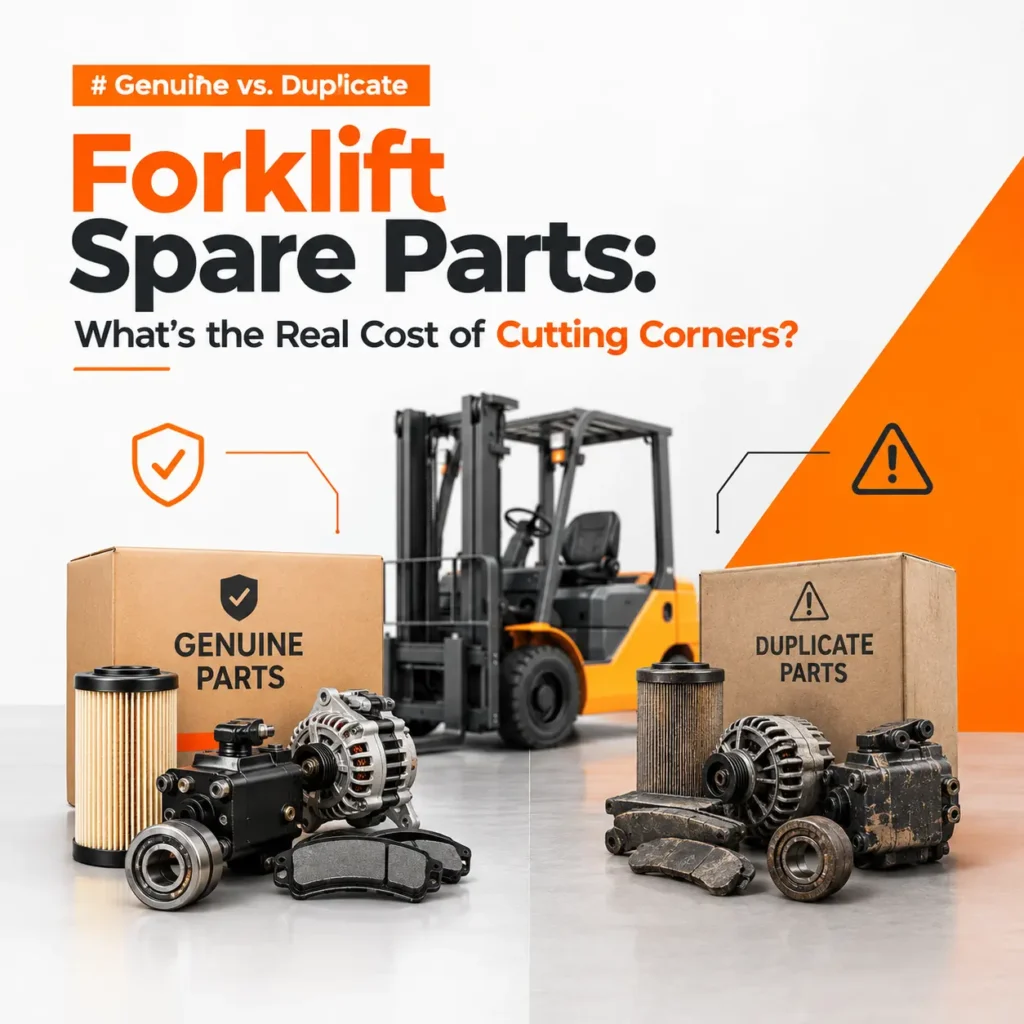
Genuine vs. Duplicate Forklift Spare Parts: What's the Real Cost of Cutting Corners?
Genuine vs. Duplicate Forklift Spare Parts: What's the Real Cost of Cutting Corners?
When a forklift breaks down and production is on hold, the pressure to fix it fast — and cheap — is real. This is exactly the moment when duplicate or unbranded spare parts look tempting: they’re often 30-50% cheaper and can seem readily available. But the price tag on the part is only part of the real cost. Here’s what’s actually at stake when you choose duplicate over genuine.
What "Genuine" and "Duplicate" Actually Mean
Genuine (OEM) parts
Genuine (OEM) parts are manufactured to the exact specifications of the original equipment maker — Toyota, Godrej, Jungheinrich, Heli, Hangcha, Linde — with the tolerances, materials, and quality control that match what came on the machine originally.
Duplicate parts
Duplicate parts are aftermarket components manufactured to approximate the original’s dimensions, often at a lower cost due to cheaper materials, looser tolerances, or reduced quality control. Some aftermarket parts are genuinely well-made from reputable third-party manufacturers — but a large share of what’s sold as “compatible” or “duplicate” in the broader market is manufactured to a price point, not a performance standard.
The Real Risks of Duplicate Parts
Shorter lifespan
Components like hydraulic seals, filters, and pump parts made from lower-grade materials wear out faster — meaning you’re often back at the same repair within months, effectively paying twice for a job you thought was done.
Compounding damage
A duplicate part that’s slightly out of tolerance doesn’t just fail on its own — it can cause accelerated wear on the genuine components around it. A poorly-machined hydraulic seal, for instance, can let contamination into the system, damaging the pump and valve components covered in our hydraulic problems guide.
Safety risk
For load-bearing and structural components especially — mast chains, forks, brake parts — a part that doesn’t meet original specifications isn’t just a performance issue, it’s a safety issue for your operators and anyone working near the forklift.
Warranty exposure
Using non-genuine parts can void manufacturer warranties on newer equipment, turning a small repair cost into a much larger uncovered expense if something else goes wrong afterward.
Hidden downtime cost
Because duplicate parts fail more often, the real cost isn’t the price difference on one repair — it’s the accumulated downtime, labor, and repeat service calls across a year of ownership.
When the Price Gap Might Be Worth It
To be fair, not every component carries the same risk. Lower-stakes, non-structural, easily-inspected parts — certain trim pieces, some electrical accessories — carry lower risk if a cheaper aftermarket option is used, since failure is inconvenient rather than dangerous or damage-compounding. The real caution applies specifically to hydraulic components, load-bearing parts, and anything integrated into the safety or lifting system.
How to Make Sure You're Getting Genuine Parts
- Buy from a supplier with direct brand relationships, not just a general spare parts seller claiming compatibility
- Ask for part numbers that match OEM specifications, not just "equivalent" descriptions
- Be skeptical of prices that seem too good relative to genuine part pricing — a large price gap usually reflects a large quality gap
- Check for proper packaging and documentation — genuine parts typically come with manufacturer markings and traceable sourcing
Book Your Forklift Repair & Service Today
Don’t wait for a breakdown to find a service provider. The best time to build a relationship with a reliable forklift repair company is before you need them urgently. Call us, WhatsApp us, or fill out our contact form — and a Shastha team member will get back to you within the hour during business hours.
Our Approach
Our spare parts inventory of 15,000+ SKUs covers genuine and OEM-compatible components specifically for Toyota, Godrej, Jungheinrich, Heli, Hangcha, and Linde forklifts — sourced to match original specifications rather than approximate them. Whether it’s a hydraulic seal, pump component, or structural part, using the correct-spec component the first time is what actually prevents the repeat breakdowns we’ve covered throughout this series.